Sheba Arts Festival 2026

About
During my MSc training, I encountered the concept of disenfranchised grief, a form of loss that is often unrecognised or unsupported. It gave language to something many migrants carry: the grief that can accompany migration.
This work draws on the Dual Process Model of grief, which suggests that we move between loss and restoration rather than progressing through grief in a linear way. Migration often embodies both experiences simultaneously. It takes much away, while also creating possibilities for renewal.


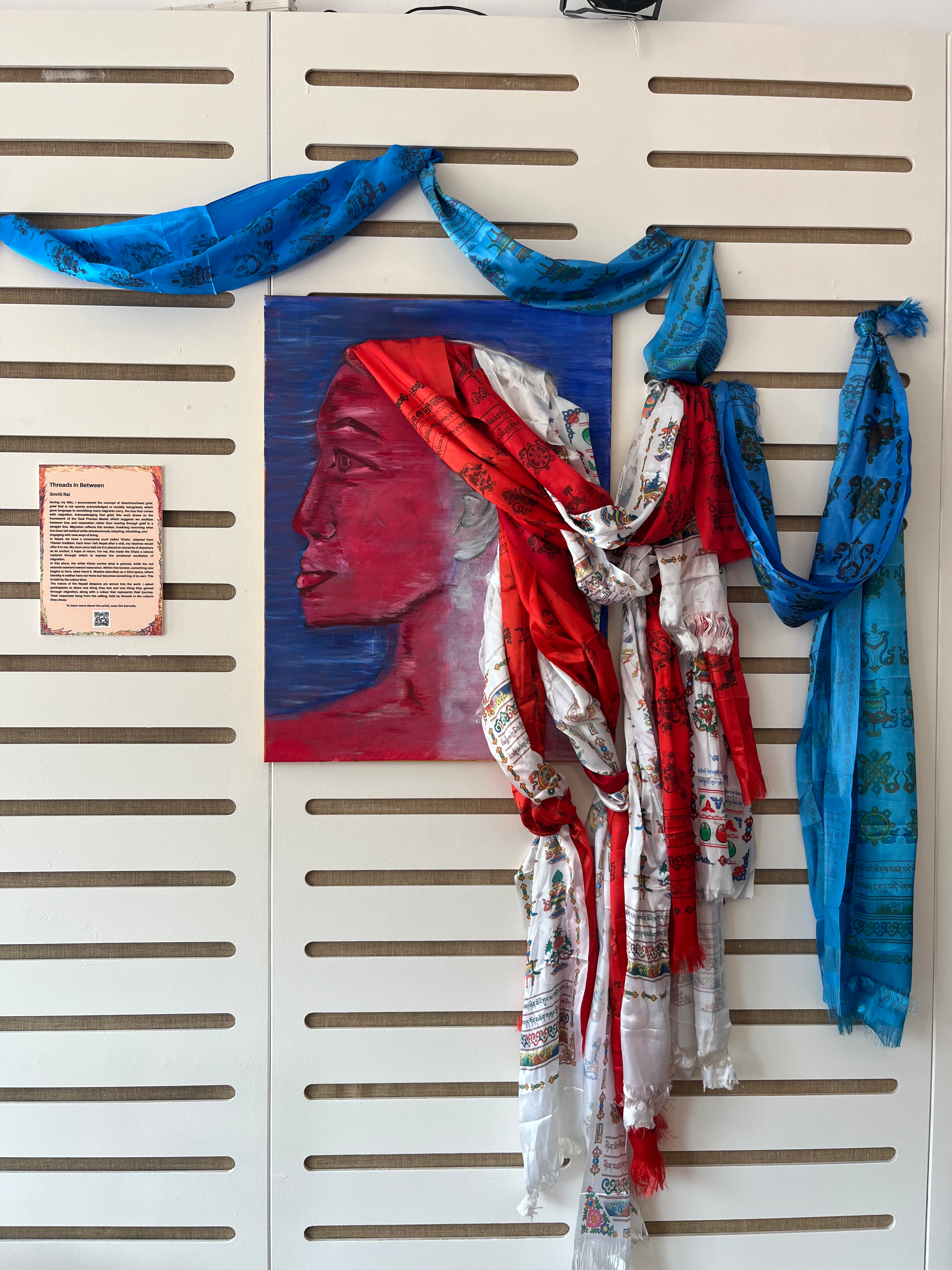
A central material within the work is the khata, a ceremonial scarf used in Nepal and adapted from Tibetan tradition. My relatives would often offer me a khata when I left Nepal after visiting. My mother once described it as an anchor and a gesture of return, something given at departure while holding hope for reunion. The khata therefore became a natural material through which to explore migration, attachment and longing.
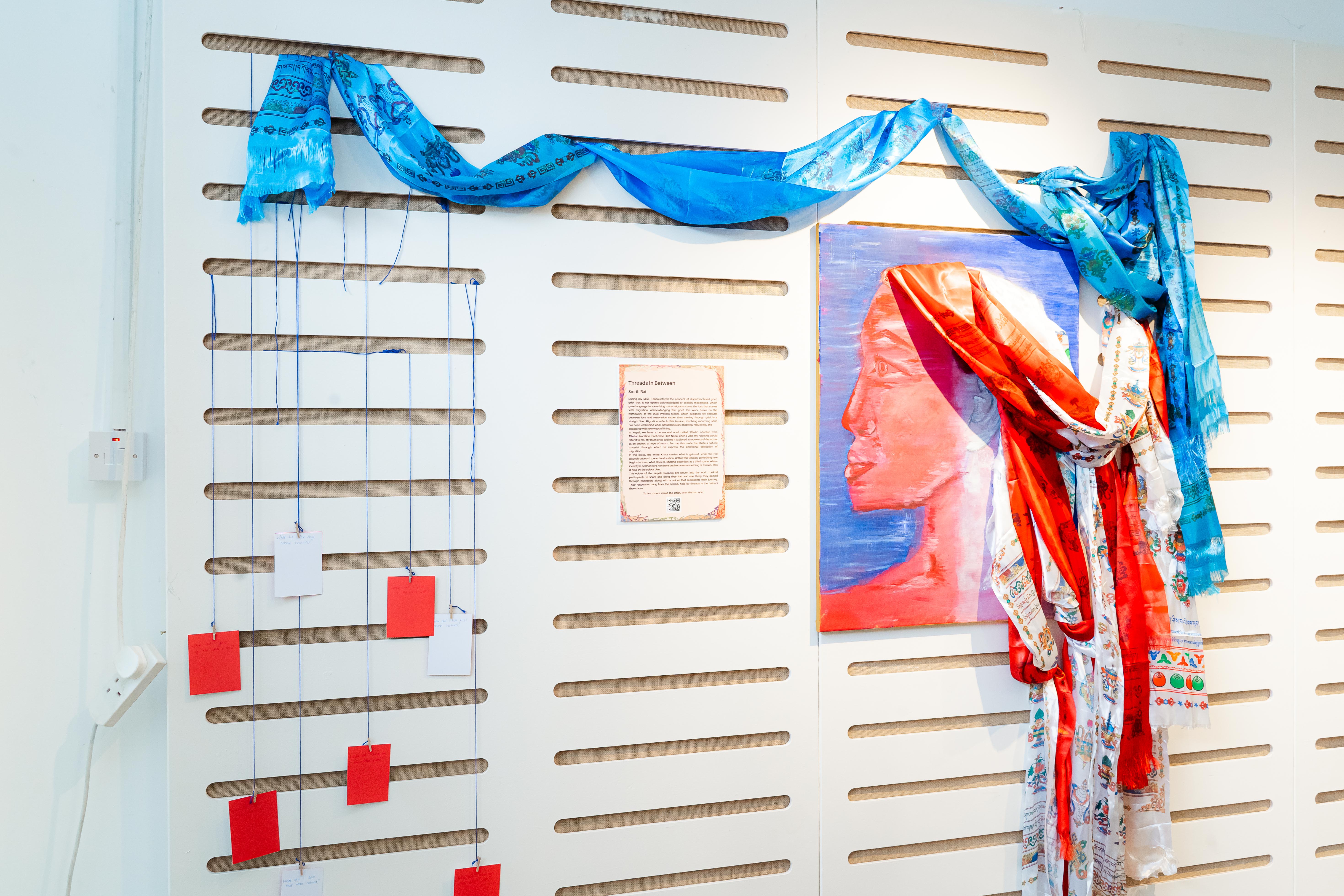
In the installation, the white khata represents what is grieved, while the red extends outward towards restoration and possibility. Between these tensions emerges something new: what Homi K. Bhabha describes as a Third Space, a space where identity is neither entirely one thing nor another, but continually becoming. This transformation is represented through the colour blue.
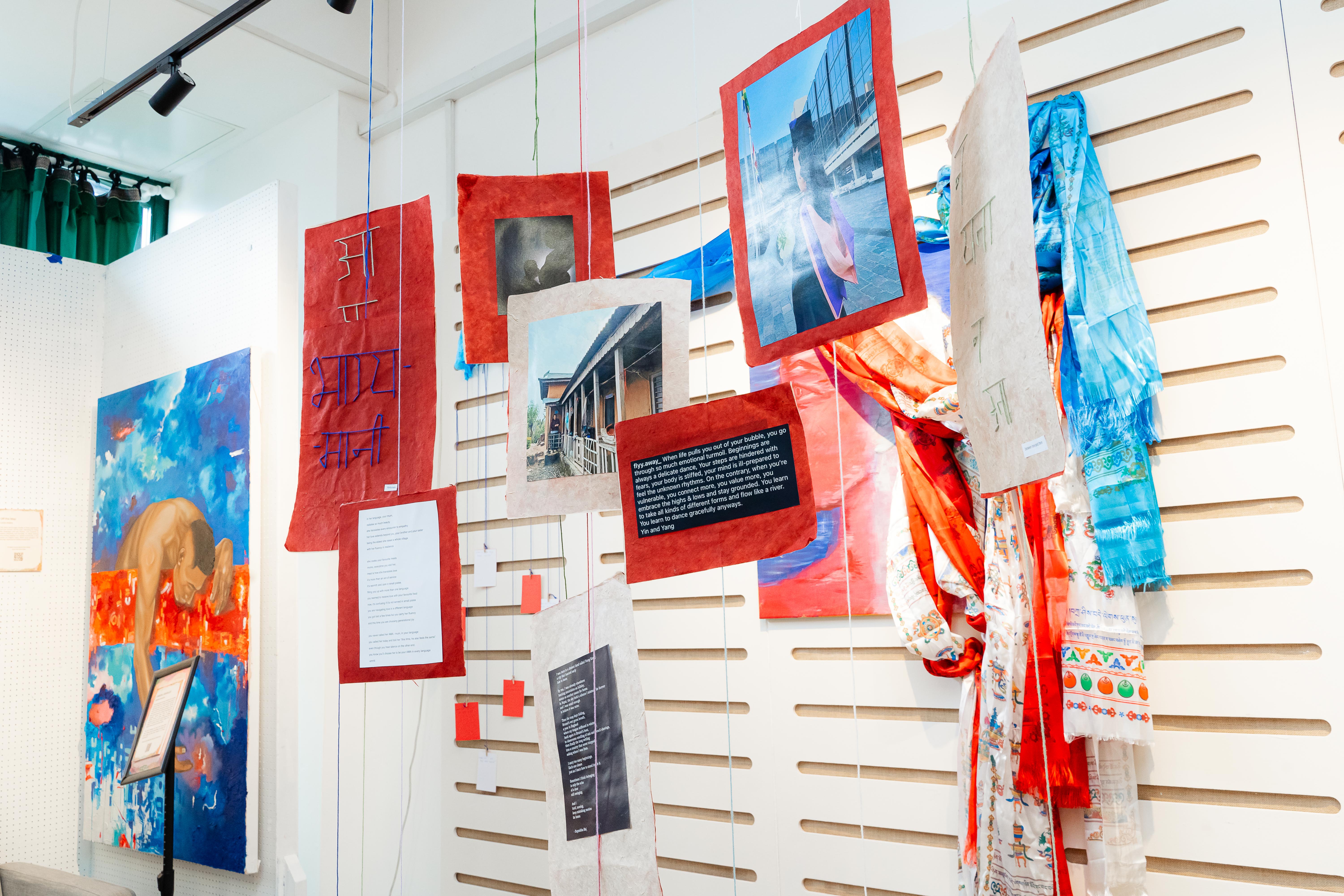
The work also incorporates the voices of the Nepali diaspora. Participants were invited to share one thing they had lost and one thing they had gained through migration, alongside a colour that represented their journey. Their responses hang suspended within the installation, connected by threads in their chosen colours.
Together these voices create a collective reflection on migration as both loss and transformation.