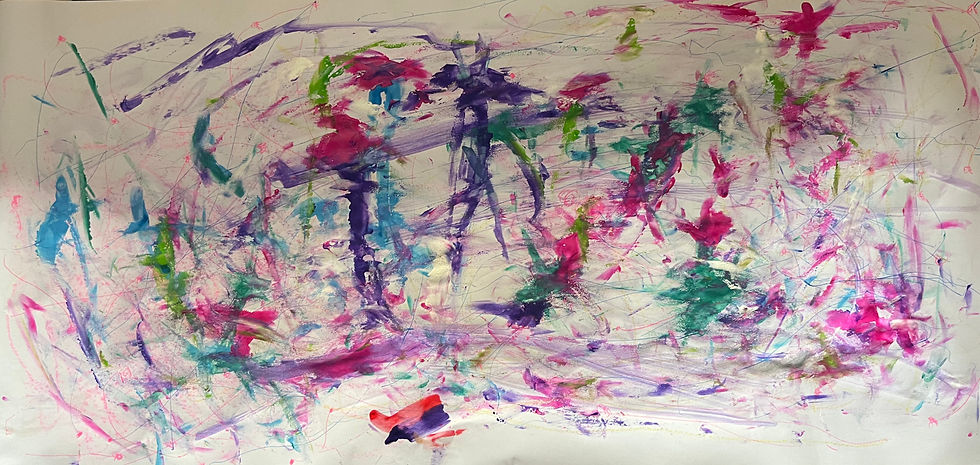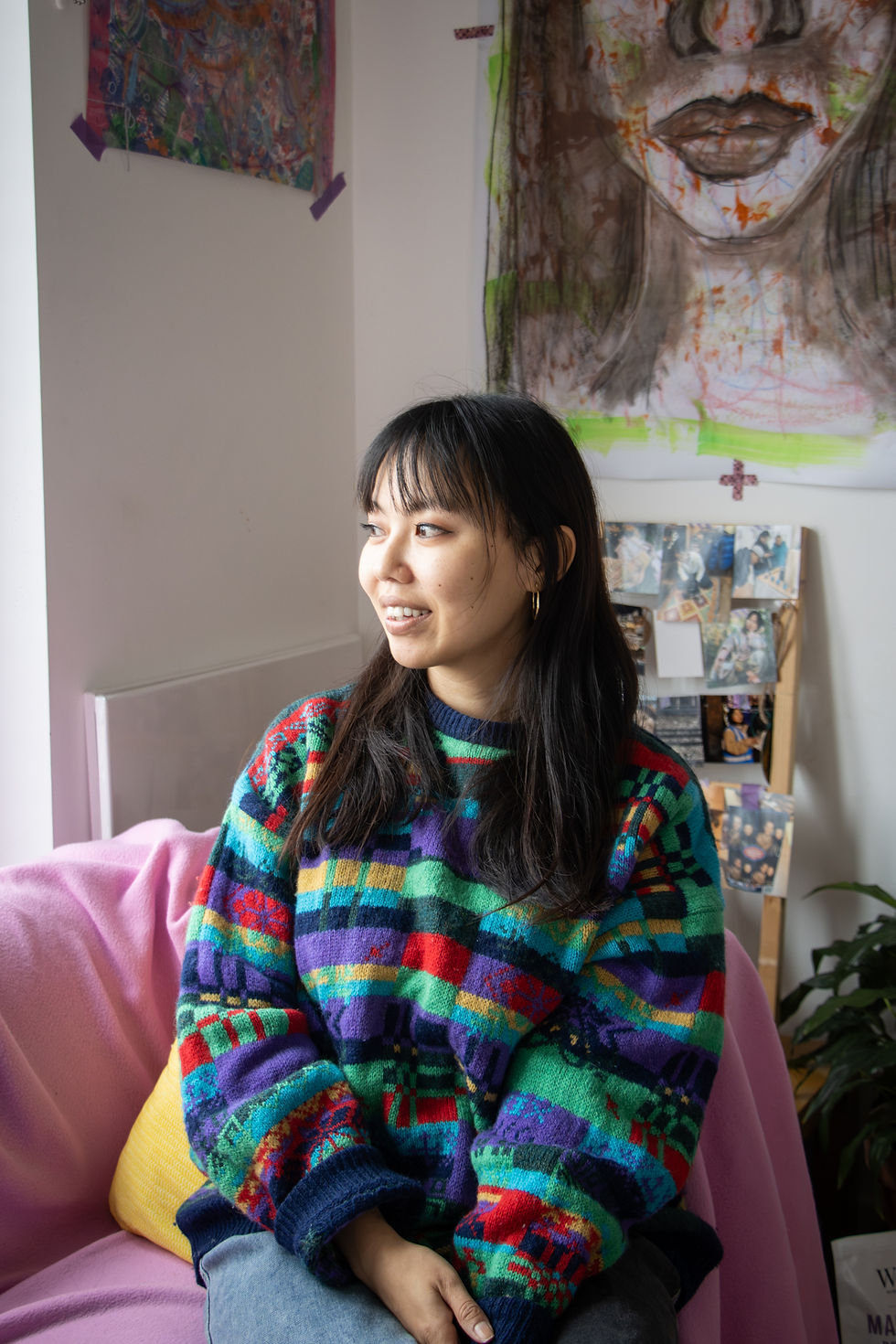
Art that lives in the in-between.
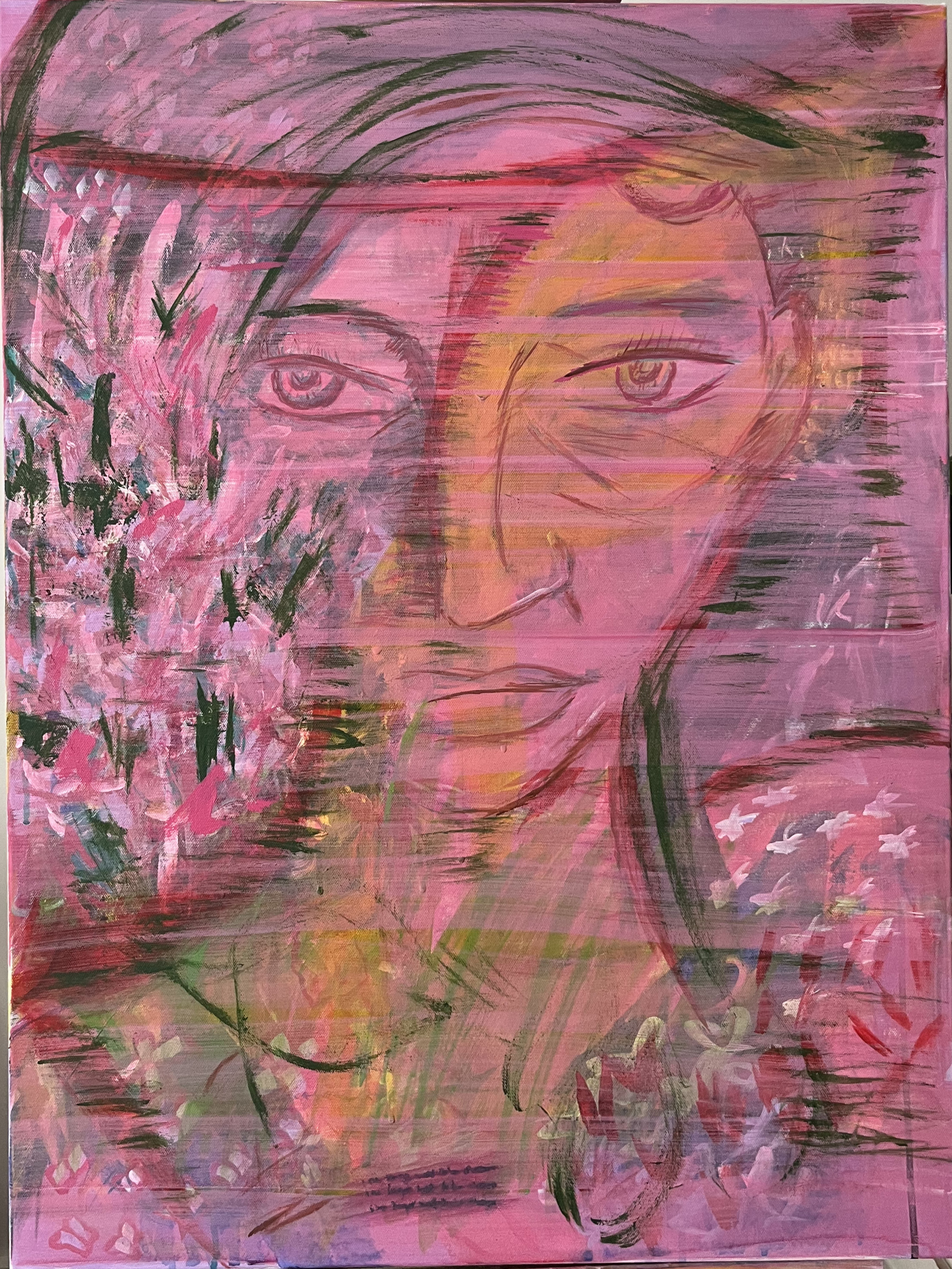
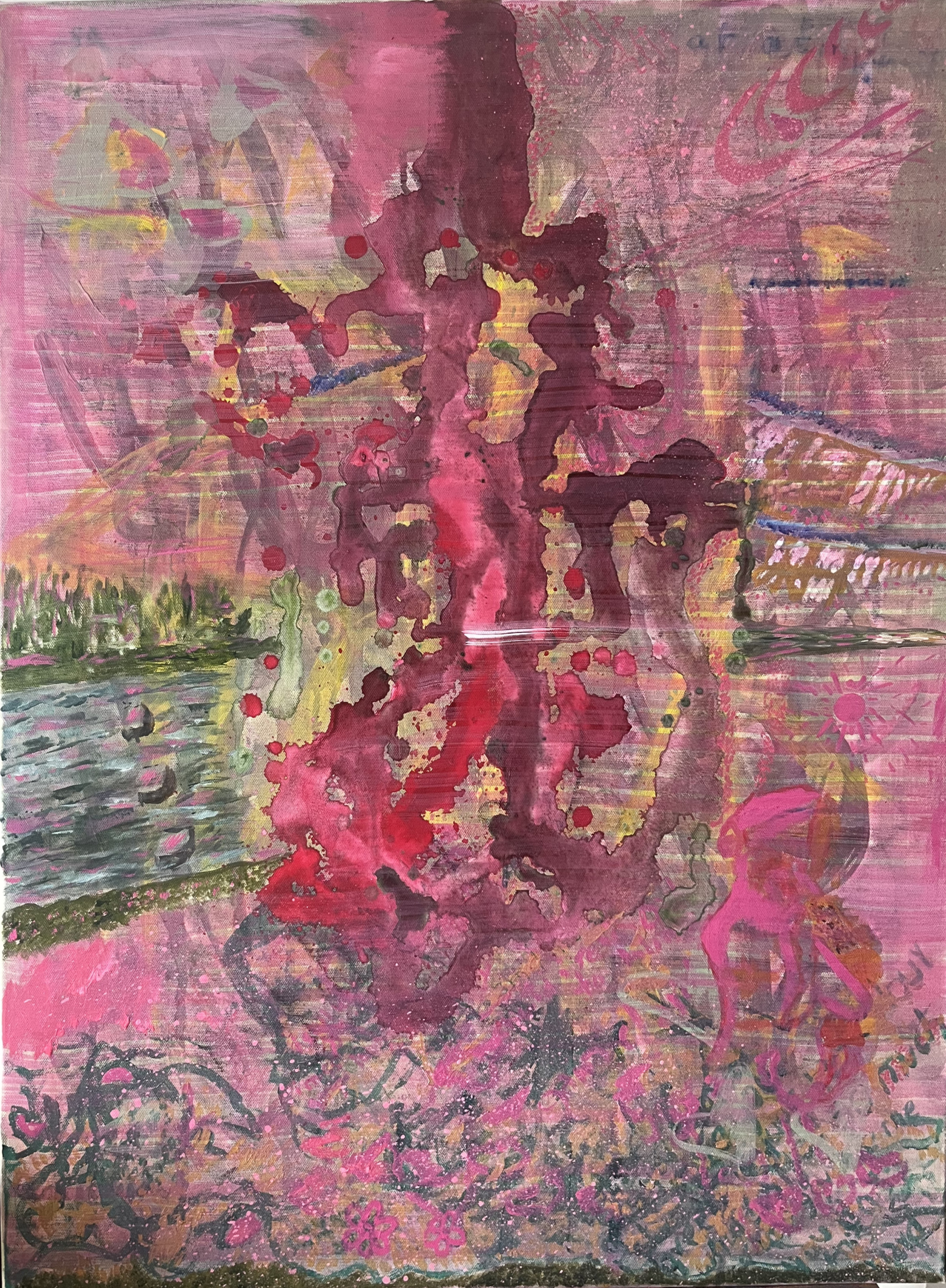
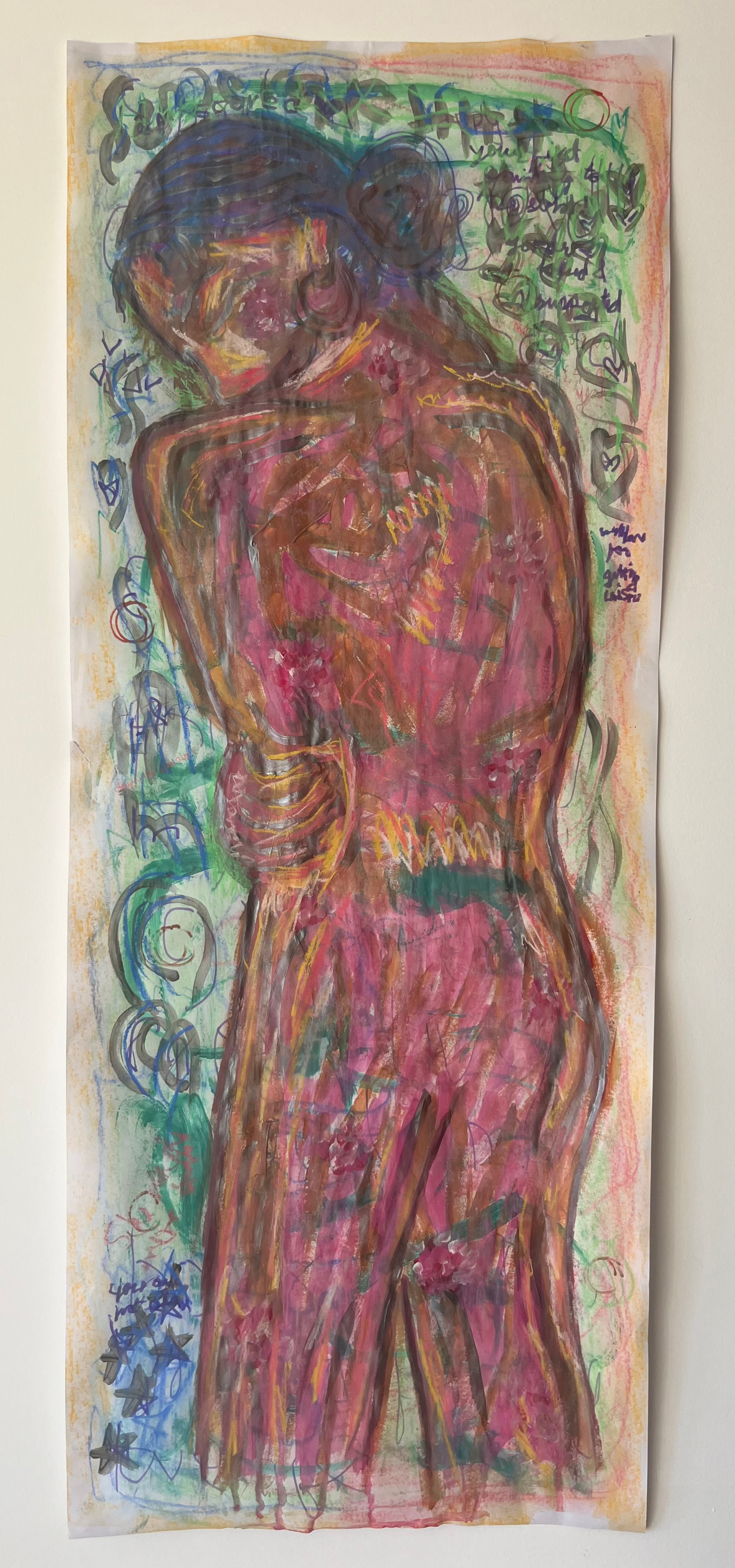
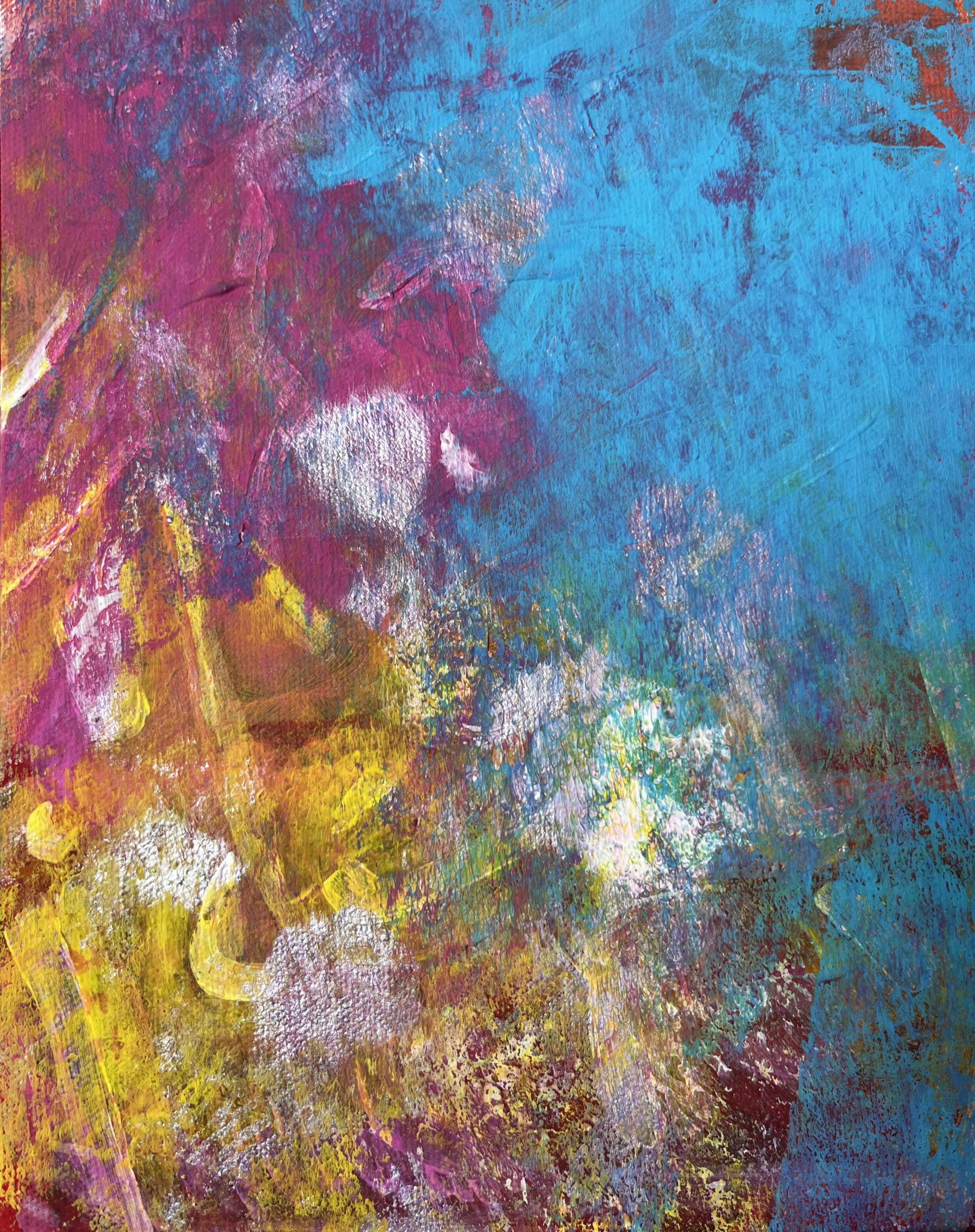
I'm a Nepali-British, Salford-based mixed-media artist. My practice sits at the intersection of art, health, and wellbeing, shaped by my work as a therapist and my own experience of living between worlds.
I first studied art at GCSE and sixth form, then stepped away to pursue a BA in Communication, Media and Culture at Oxford Brookes, followed by a career in creative marketing. Art came back into my life during my counselling training as a self-care. Then, it became something more.
Drawing on expressive arts therapy, I use painting and mixed media to explore the things that sit just beyond language:
-
Identity and belonging
-
Migrational grief
-
Cultural memory
-
The spaces between words
photography by Iqra Saied
Current work

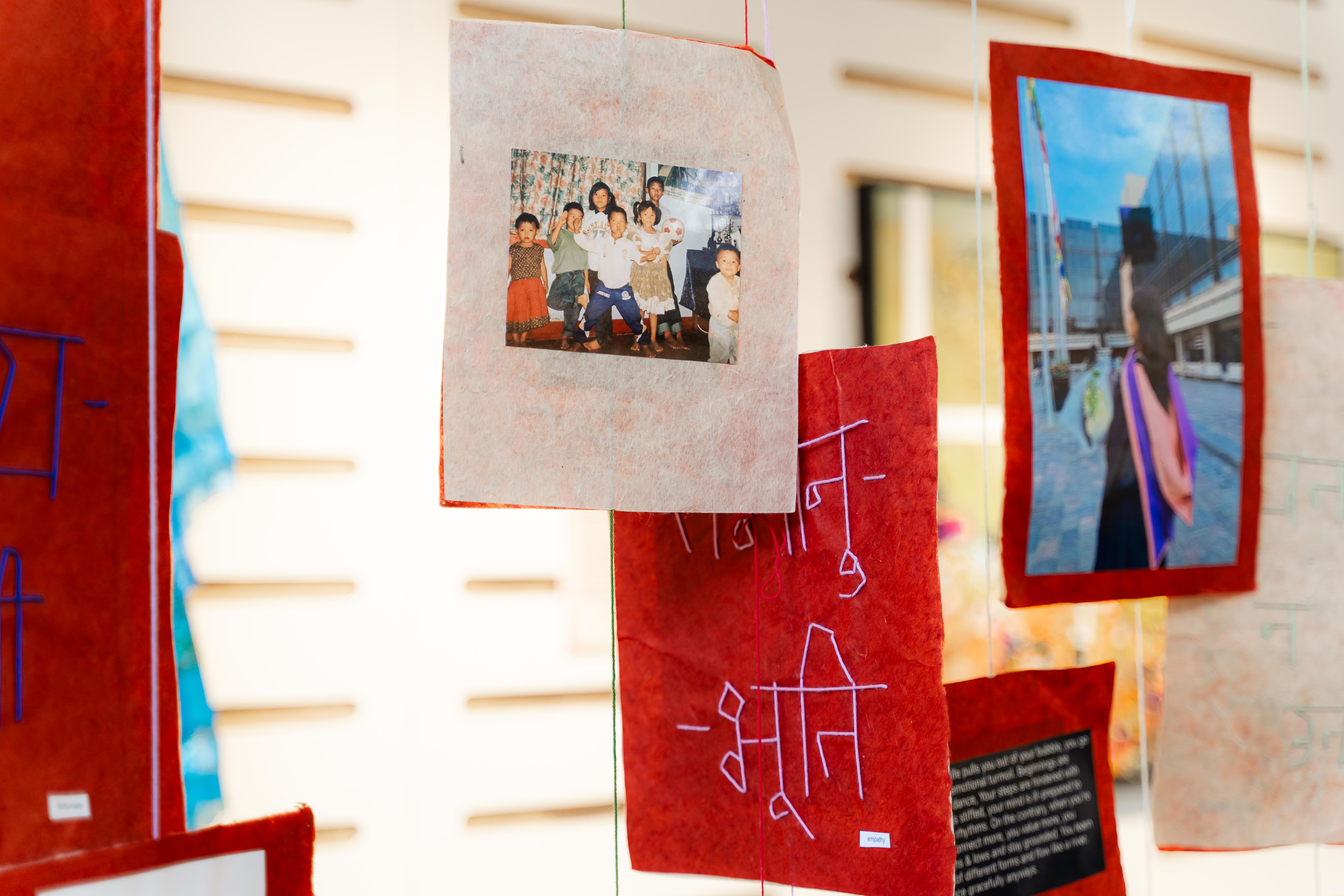
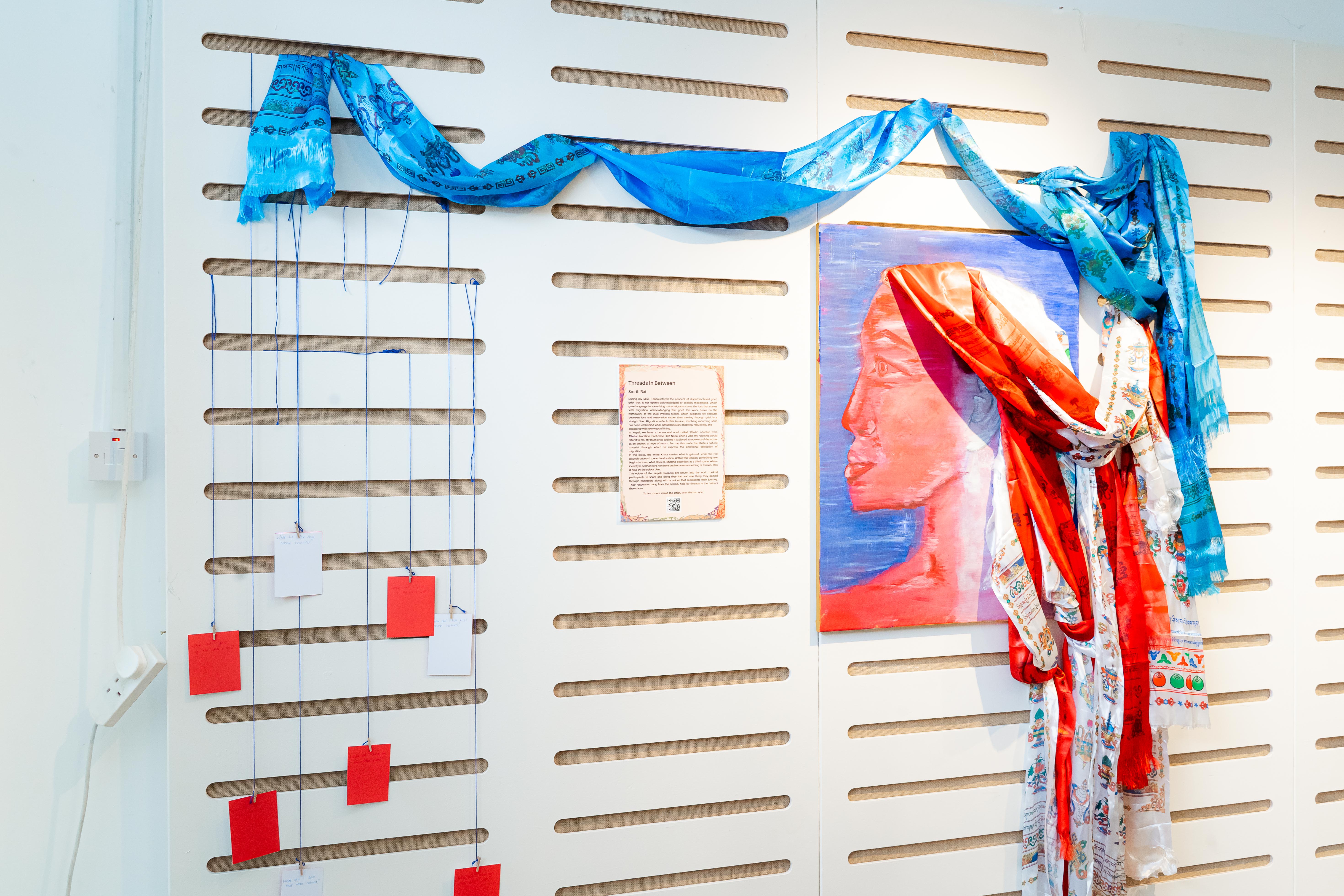
Recent Project: Sheba Arts Festival 2026
An installation exploring migration, grief, belonging, and the spaces that emerge between departure and return.
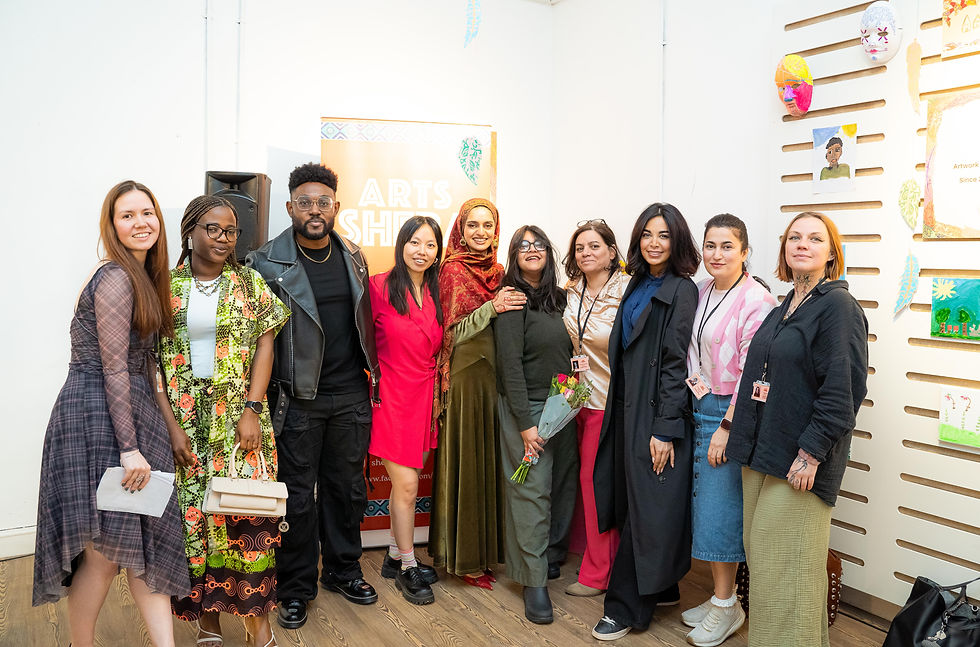
Commissioned by Sheba Arts for Sheba Arts Festival 2026, showcased at Longsight Art Space on June 2026


More about the project here.
Past work
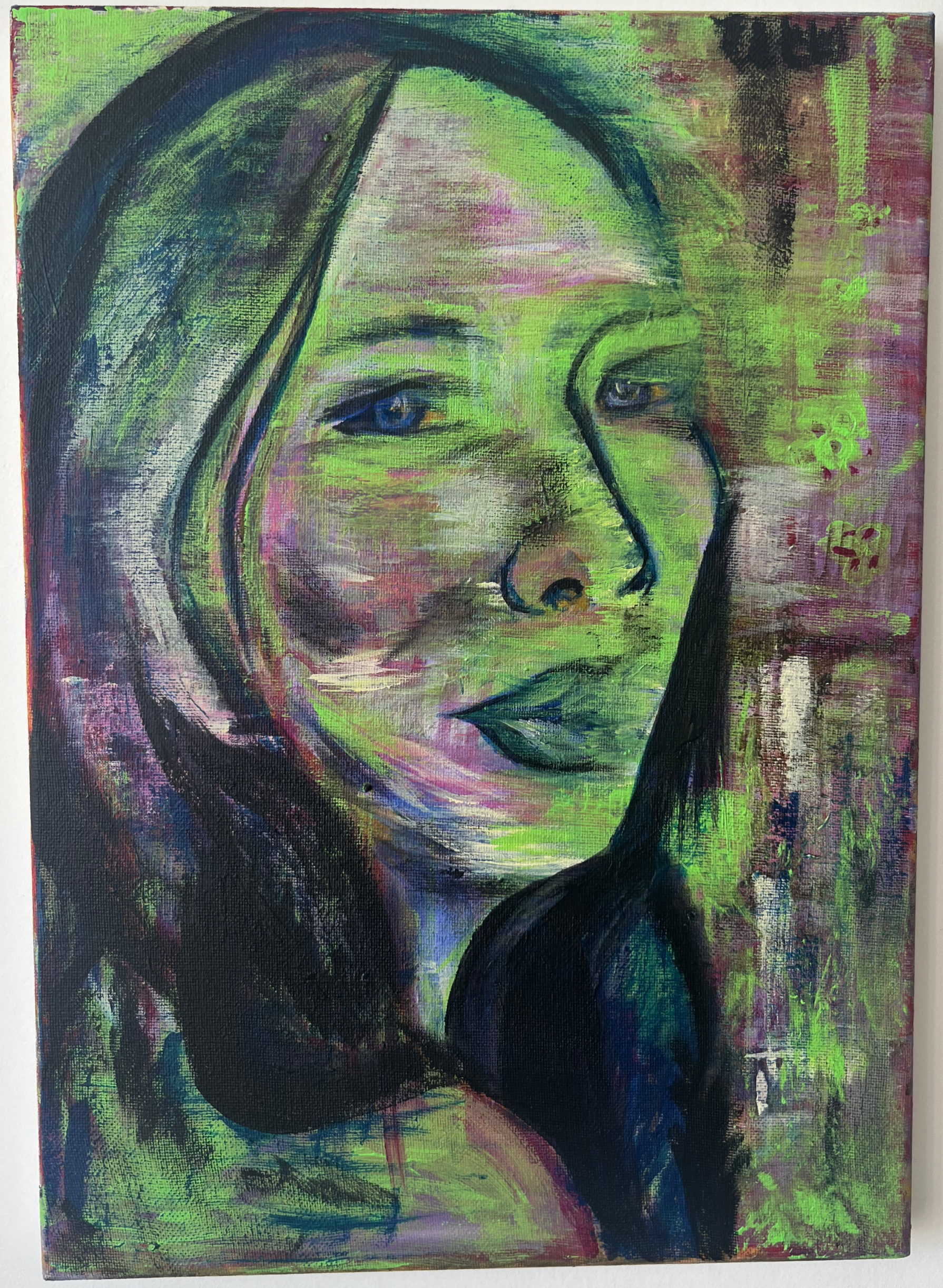
Taken part in a group show fundraiser for FourthWall Folkestone



Testimonial

“It has been a pleasure to work with Smriti. She is professional, reliable and kind, and makes everyone around her feel comfortable, valued and supported. She brings meaningful ideas and creativity to her work, while always being community-led and respectful of people’s individual stories and experiences. Her thoughtful and inclusive approach makes her a wonderful person to work with.”
- Sheba Arts Team
Work with me